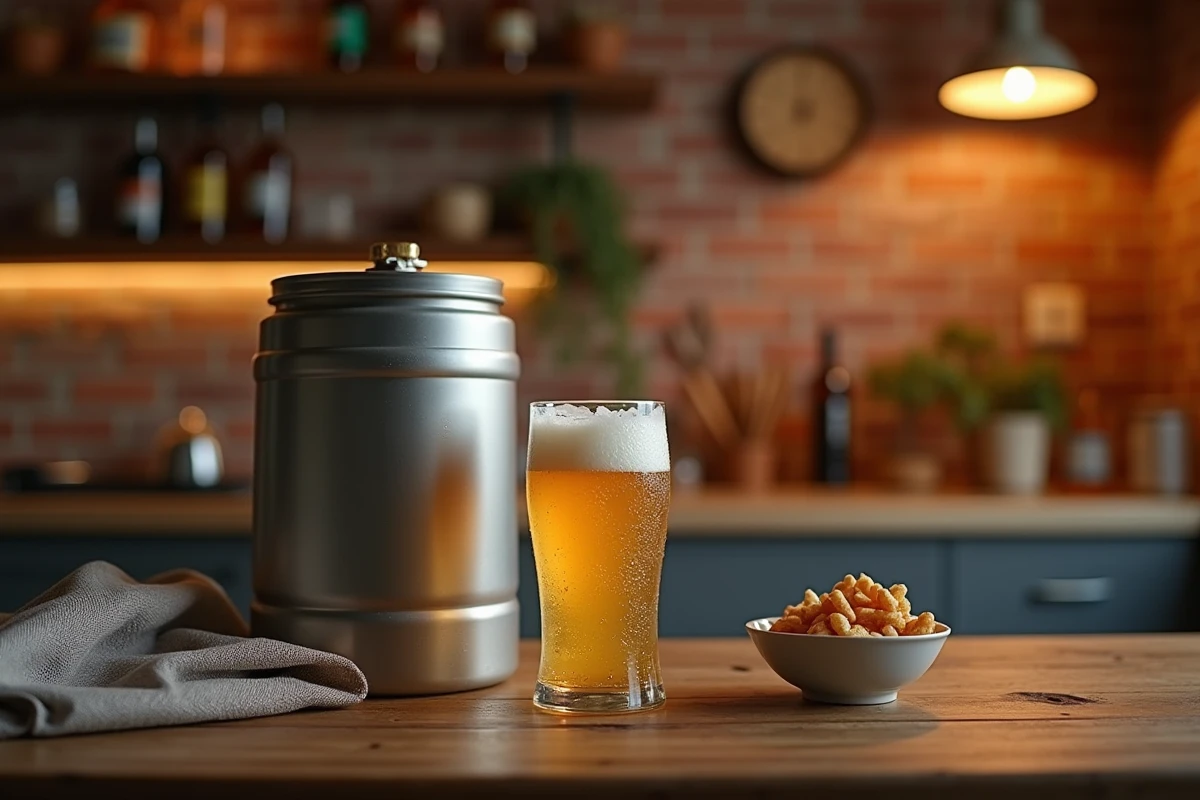
Have you ever opened a pack of cans for a get-together with friends, only to find three or four half-empty, warm cans left on the table the next morning? The 5L keg of panaché solves this problem at the source. This compact format allows you to serve a fresh draft beverage by the glass, without opening more than what your guests will actually drink. The panaché keg combines practicality, taste, and waste reduction during home gatherings.
Why the 5L panaché keg effectively limits waste
Waste during a gathering rarely comes from over-ordering. It comes from packaging. An opened bottle or a half-consumed can loses its carbonation within a few minutes. It ends up in the sink.
The 5L keg works differently. The beverage remains pressurized inside the container, even after the first serving. As long as the keg is kept cool, the panaché retains its carbonation for several weeks after opening. You serve by the glass, on demand, without exposing the rest of the volume to ambient air.
This principle of matching the available volume to the number of guests is, in fact, an argument that brewers highlight in their environmental commitments. The 5L mini-kegs are featured as a lever to reduce beverage waste and packaging waste.
To learn more about the 5L panaché keg and its uses at gatherings, this format deserves attention beyond just its practical aspect.

5L panaché keg without a machine: how serving works
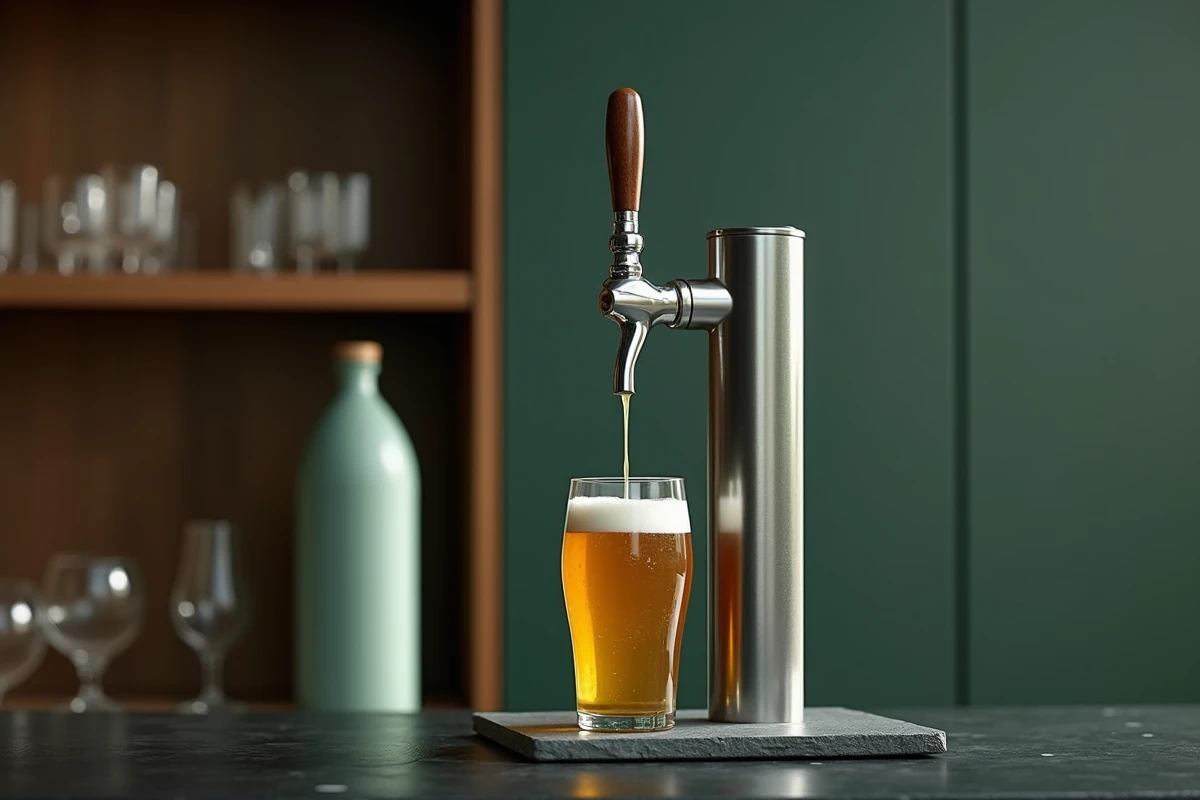
You don’t need a beer tap to use a 5L keg of panaché. Most mini-kegs sold in supermarkets come with their own serving system. An integrated tap, sometimes a self-pressurized mechanism, is sufficient to pour a properly foamed glass.
The operation is based on a simple principle. The brewery packages the beverage directly from the tank, under controlled pressure. The keg maintains this pressure thanks to an internal airtight system. At the moment of serving, you open the tap, and the pressure pushes the liquid out. No pump, no CO2 cartridge to buy separately.
Key actions for good service
The temperature of the keg makes all the difference. A panaché served too warm foams excessively, leading to beverage loss with each glass. Place the keg in the refrigerator for at least six hours before serving.
The angle of the glass also plays a role. Serve by tilting the glass at a 45-degree angle, then gradually straighten it. This technique limits excessive foam formation and allows you to fill the glass without overflowing.
5L panaché keg or bottles: the real calculation for a gathering
Before choosing your format, ask yourself a practical question: how many glasses will actually be consumed tonight? A 5-liter keg represents about twenty 25 cl glasses. For a group of six to ten people over a few hours, this volume easily covers the consumption of panaché without unnecessary surplus.
- A pack of individual bottles generates waste for each portion served, and each opened bottle must be finished quickly to avoid losing carbonation
- The 5L keg produces only one packaging waste for about twenty portions, and the unused beverage remains consumable in the following days
- 33 cl cans offer unit flexibility, but the cost per liter is generally higher than that of the same panaché in a keg
Several French brands have indeed listed these 5L mini-kegs of panaché and radler since 2023, positioning them as an alternative to cases of bottles for barbecues and private parties. The format is becoming a permanent fixture in summer aisles.
Packaging waste and eco-design of 5L panaché kegs
The gain in beverage waste tells only part of the story. The other part concerns the packaging itself.
A 5L keg generates less waste per liter served than a batch of individual bottles. The reason is arithmetic: a single container replaces ten to fifteen individual packages. Some manufacturers go further by designing mini-kegs with removable and recyclable components, separating metal from plastic to facilitate sorting.
This trend is part of a larger movement. Eco-responsible festivals and small community events are increasingly adopting 5L kegs as a service solution. The format streamlines logistics (fewer cases to transport, less waste to collect at the end of the evening) while offering a draft tasting experience that remains friendly.
How the compact format changes the organization of a gathering
You free up space in the refrigerator. A 5L keg takes up less room than the equivalent in bottles. The service is centralized: a single dispensing point instead of caps scattered across each table.
- Fewer manipulations mean less breakage and fewer spilled bottles
- The keg sits on a countertop or table, visible to everyone, which naturally regulates consumption
- At the end of the evening, only one container to store in the fridge for the following days
The 5L panaché keg doesn’t turn an ordinary evening into a gastronomic event. It solves a mundane but real problem: serving the right amount without wasting the surplus. For gatherings of six to twelve people, this format represents the best compromise between preserved flavors, service practicality, and waste reduction. The next time you prepare for an aperitif, count your guests before choosing your packaging.