
Buying a house in Thailand with a budget of 7,000 euros is quite a unique gamble. The Thai real estate market does offer properties at this price level, but they are concentrated in specific rural provinces, far from tourist areas. Understanding what this budget really entails, the legal constraints that apply to foreigners, and the hidden costs that follow the purchase allows for a realistic assessment of such a project.
House at 7,000 euros in Thailand: what this price really covers
At this budget level, the available properties are older constructions located in rural provinces far from economic hubs. They are most often wooden or concrete houses, sometimes without connections to current standards of electricity or plumbing.
The listing price reflects only a fraction of the total cost. Since 2023-2024, the costs of bringing properties up to standard (electricity, plumbing, safety) have significantly increased due to rising material and local labor costs. Several agents and real estate bloggers report that the actual budget frequently doubles or triples once essential renovations are factored in.
Strategies to contain this budget are detailed in the guide house Thailand 7000 euros on Octroi Immobilier, which discusses negotiation levers and anticipated expense items.
The location of these properties also raises a resale question. In the most remote provinces, the secondary market is almost non-existent for foreign buyers, and the property’s appreciation remains uncertain in the long term.
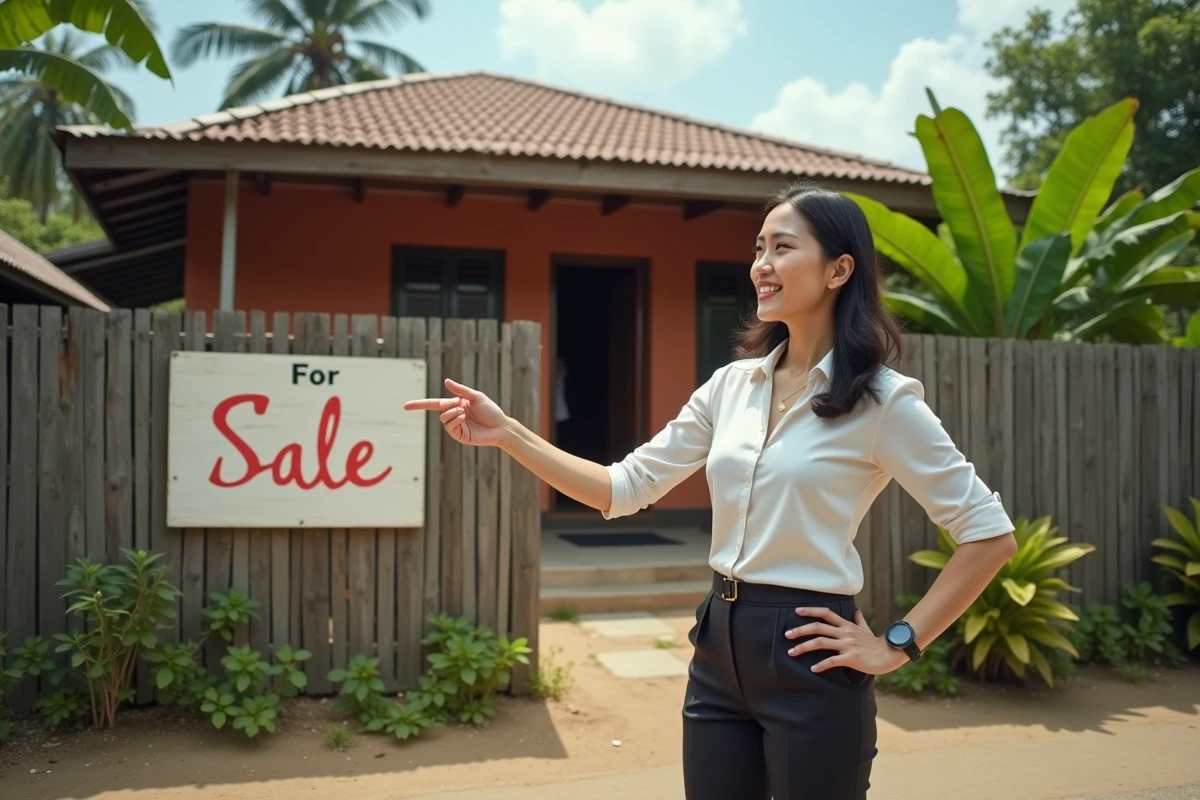
Land ownership in Thailand: what a foreigner can and cannot own
The basic rule is well-known but often misunderstood: a foreigner cannot own the land on which a house is built. They can own the structure, but not the land. This distinction has direct consequences on the security of the investment, even for a low-budget project.
Long-term lease (leasehold): the most common route
The majority of foreigners buying a house in Thailand go through a land lease of thirty years, renewable. This lease (leasehold) must be registered at the Land Office to have enforceable legal value. Without this registration, the lease does not protect the buyer in case of a dispute with the landowner.
The renewal of the lease is not guaranteed by law. It relies on a contractual agreement with the landowner, which introduces a long-term risk that land returns regularly confirm.
Setup via a Thai company: increased scrutiny
The other option is to create a Thai company in which the foreigner holds a minority share, with the company owning the land. This setup is still tolerated, but it is subject to increased scrutiny by the authorities since 2023-2024. Practitioners (lawyers, notaries) report more frequent checks on the reality of the majority Thai shareholding.
For a project at 7,000 euros, the costs of creating and managing this company annually represent a disproportionate share of the total budget. Legal structuring costs can absorb a significant portion of the initial envelope.
Actual real estate purchase budget in Thailand: the items that the listed price does not show
Beyond the acquisition price, several expense items are systematically added. Ignoring them skews the project’s evaluation.
- Property transfer fees and associated taxes (registration fees, specific business tax if applicable) vary depending on the nature of the transaction and the type of land title
- Lawyer fees for verifying the property title, drafting the lease, and conducting due diligence on the seller, particularly necessary in rural areas where land titles may be incomplete
- Costs of bringing the construction up to standard, which constitute the most unpredictable and burdensome item for older low-priced houses
- Recurring maintenance costs in a tropical climate (humidity, termites, accelerated material degradation) that impose regular expenses often underestimated
Without a prior technical assessment of the construction by a local professional, the risk of discovering hidden defects after purchase is high, especially for the cheapest properties on the market.
Land liberalization for foreigners in Thailand: where are the reforms
Projects aimed at facilitating direct access to land ownership for non-Thais have largely been put on hold. The official discourse has shifted since 2023-2024 towards a limitation of real estate inflation linked to foreign buyers, which reduces the prospects for easing in the short term.
This situation means that the current legal setups (long-term lease or company) will likely remain the only available options for the coming years. The available data does not allow for predicting a regulatory change in favor of foreign buyers in the near future.
Consequences for a low-budget project
For a purchase at 7,000 euros, the absence of reform implies bearing the same legal and administrative costs as a high-budget purchase. The structure of fixed fees (lawyer, registration, potential company) weighs disproportionately heavier, making the total cost/value ratio particularly unfavorable.
A house purchase project in Thailand for 7,000 euros remains technically possible, but the actual budget after renovations, legal fees, and bringing up to standard diverges significantly from the listing price. The feasibility depends less on the catalog price than on the ability to anticipate and finance all peripheral costs.
Before committing, having a technical audit of the property and a complete verification of the land title by a Thai lawyer is the minimum to secure an investment in this market segment.