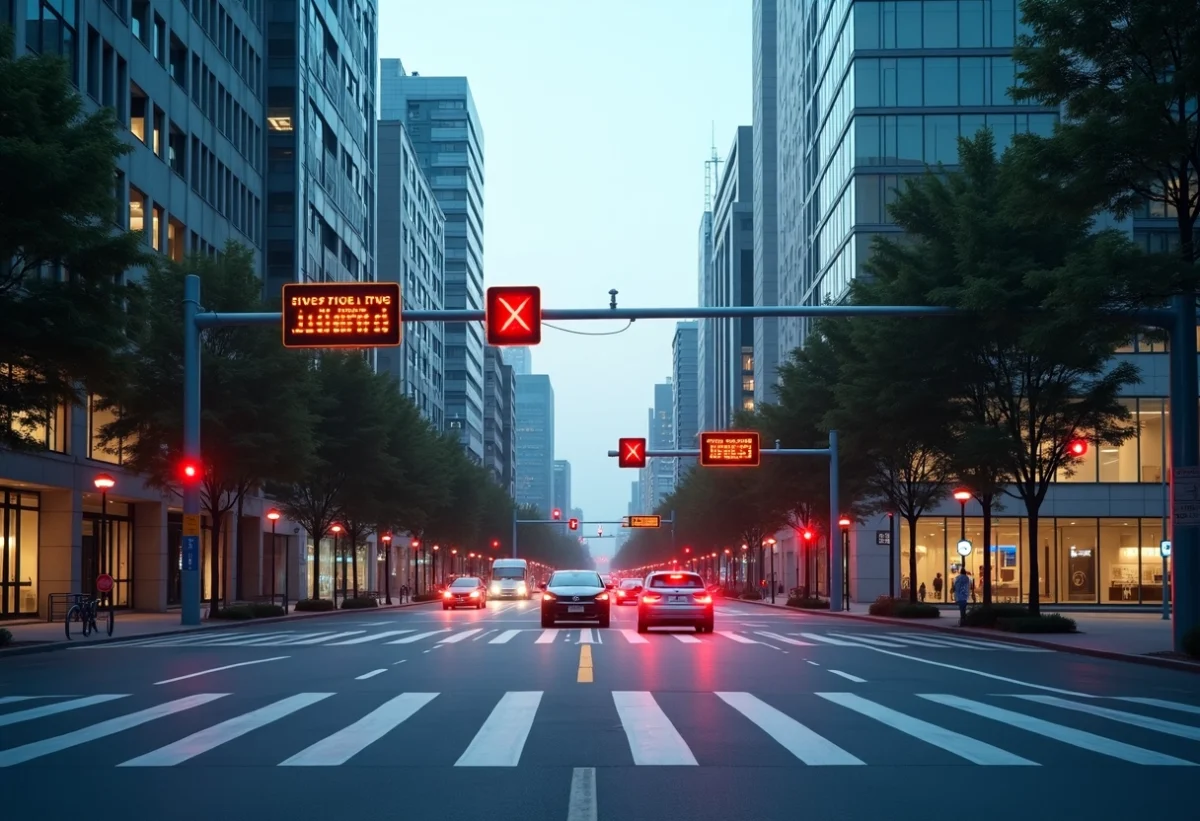
In 2025, drivers will have to adapt to completely revised driving rules. Among the new features, the introduction of urban zones reserved exclusively for electric and hybrid vehicles aims to drastically reduce polluting emissions.
New legislation will impose advanced safety devices, such as automatic braking systems and drowsiness sensors, in order to decrease the number of accidents. These measures, although restrictive, promise better road safety and improved air quality.
The new speed limits in 2025
Starting in 2025, speed limits on French roads will undergo significant changes. The goal is twofold: to reduce road accidents and decrease greenhouse gas emissions.
First, highways will see their maximum speed reduced to 110 km/h. This measure, which may seem drastic, is part of a European policy aimed at harmonizing road safety rules and combating climate change. In contrast, for secondary roads, the speed will drop from 90 km/h to 80 km/h, a measure already tested in 2018 in certain regions and which will be generalized.
One last point deserves clarification: the rumor that the speed on highways would be limited to 100 km/h in 2025 is an April Fool’s joke. However, the new regulations, which are very real, mark a turning point for the highway code in France. In urban areas, the maximum speed will be standardized to 30 km/h in all residential zones. This measure aims to protect pedestrians and cyclists and reduce noise pollution. Some major cities like Paris, Lyon, and Bordeaux have already anticipated this regulation, and the results in terms of safety are promising.
The new limits may seem restrictive for drivers. However, they respond to a necessity for safety and environmental respect. It should be noted that reducing speed not only saves lives but also decreases fuel consumption and polluting emissions.
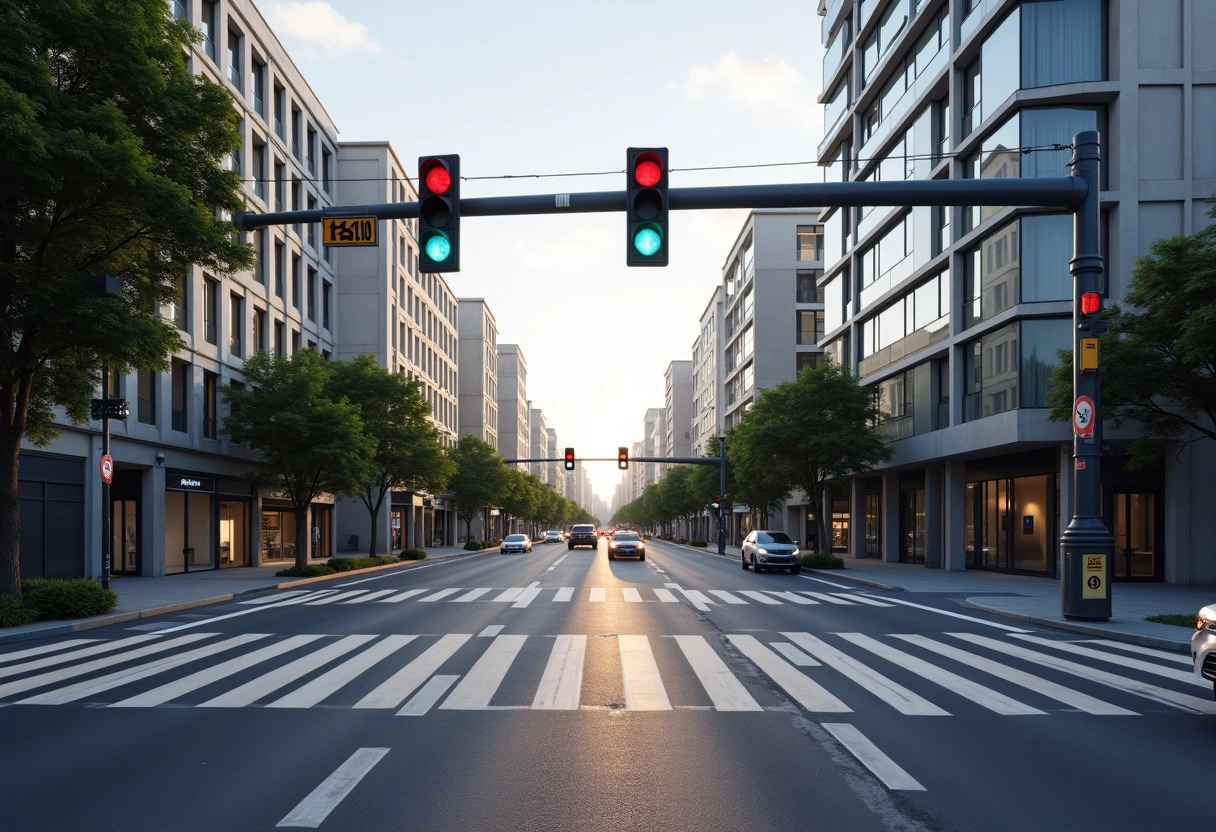
Low Emission Zones (LEZ) and Their Impacts
Low Emission Zones (LEZ) will expand significantly by 2025. The Climate Law mandates the creation of these zones in all urban areas with more than 150,000 inhabitants.
Cities Affected and Bans
- Paris, Lyon, and Grenoble will ban Crit’Air 3 vehicles starting January 2025.
- Saint-Etienne will ban Crit’Air 4 and 5 vehicles in the same year.
- Clermont-Ferrand will ban unclassified vans and trucks.
Impact on Air Quality
The implementation of these LEZ aims to improve air quality by reducing fine particle emissions. The World Health Organization (WHO) recommends strict values for air quality, and these measures align with this health logic.
Adaptations and Exemptions
Some cities like Strasbourg may postpone the ban on Crit’Air 3 vehicles to 2027. Others, like Marseille, Montpellier, Nice, and Reims, will not have new bans in 2025 but will maintain current restrictions on Crit’Air 4, 5, and unclassified vehicles.
The LEZ represent a major transformation for drivers. By restricting access to the most polluting vehicles, these zones aim to protect public health while promoting the transition to more environmentally friendly modes of transport.