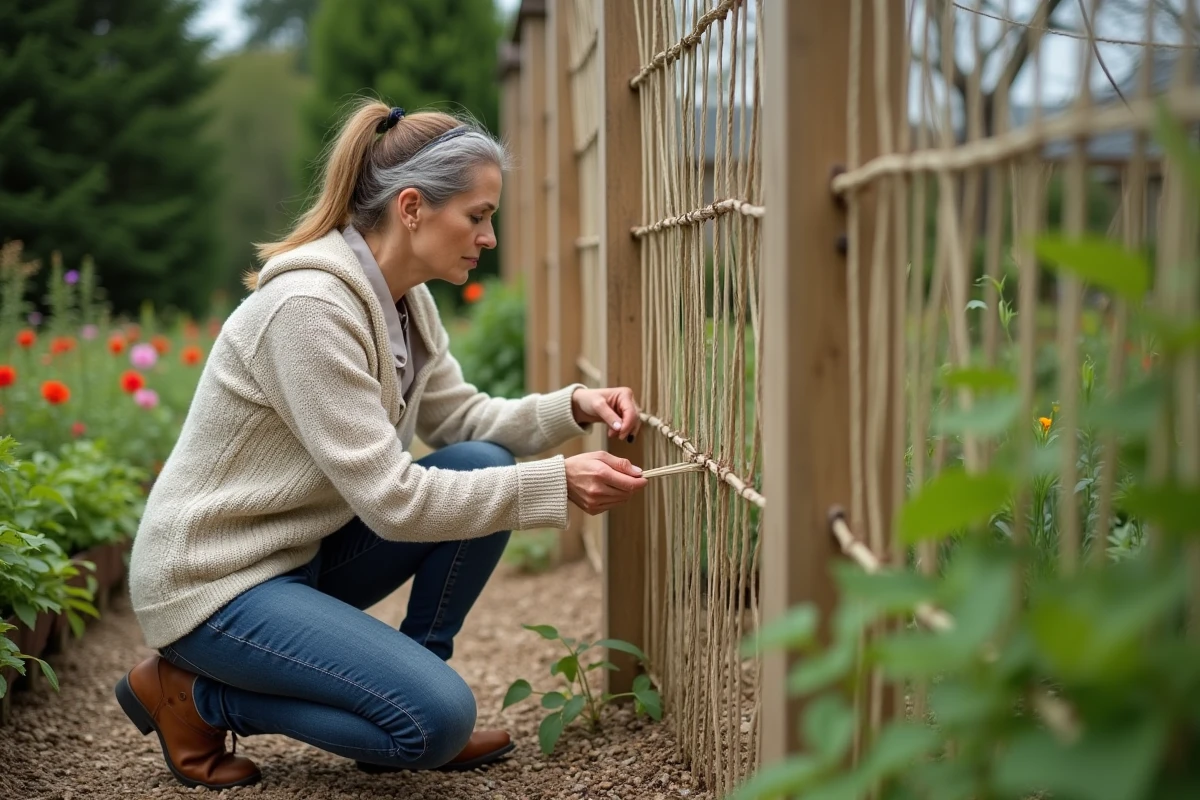
Installing natural barriers around greenhouses limits temperature fluctuations and effectively protects against prevailing winds. Despite a reputation for fragility, some wooden assemblies resist moisture and repeated shocks better than galvanized steel.
The choice of material, weaving, and treatment directly influences the durability and compatibility with the vegetable garden environment. Local regulations on low fences encourage the use of plant-based and renewable solutions.
Wooden trellises: a natural and versatile solution for the garden
Robust, versatile, and generous, wooden trellises for the garden stand the test of time without weariness. They know how to adapt: sunshade during the first heat, shield during hail showers, or even a partner for continuous breathing for delicate plants under glass. Their weaving allows the wind to circulate, softens the temperature, and prolongs the life of the glass as well as the crops.
It’s hard to imagine something more versatile: as a natural fence, elegant privacy screen, or support for climbing plants, these trellises shape the space and reveal its character, whether it’s a simple greenhouse or a veranda with atypical architecture. Made to measure, sometimes up to 2.40 meters wide, each installation fits seamlessly into the layout of the area. Natural or thermally treated wood, it doesn’t matter: longevity exceeding a decade remains accessible, with a little care in maintenance.
Installation, for its part, is within everyone’s reach. Hooks, rings, or galvanized steel chains ensure a straight, solid, and discreet fixation. Wood naturally finds its place in the garden, far from the coldness of synthetic barriers. With this choice, aesthetics and utility go hand in hand; every finish, every shade, every angle is considered from the gardener’s perspective, whether amateur or seasoned.
What types of trellises to choose for effectively protecting your greenhouses and plants?
To select the appropriate trellis, several criteria must be considered: the type of wood, treatments, dimensions, and fixation system. Pine slats stand out: they hold up well against moisture, combining flexibility and strength. Depending on whether you aim for broad shade or filtered light, you would choose either 5×23 mm or 7×23 mm.
On the finishing side, the spectrum is wide: natural wood for discretion, thermal treatment (like Thermo Wood) for resistance, or lacquer in white, pastel green, or dark green. Each of these options enhances protection and maintains the expected shade level.
Modularity? A significant advantage. Trellises can take all shapes, up to 2.40 meters, to follow greenhouses, frames, or verandas, even if the contours are trapezoidal or curved. The fixation benefits from hooks, rings, or galvanized steel chains, sometimes bichromated, ensuring stability even in turbulent weather.
Here are the main possibilities to consider before making your choice:
- Natural or treated wood: respect for decor and long-lasting resistance
- Custom-made: suitable for all architectures, even original ones
- Reliable fixings: hooks, rings, or galvanized steel chains to leave nothing to chance
What matters is to invest in adaptable and customizable trellises that combine elegance, long-term efficiency, and a healthy atmosphere for plants, whether under glass or outdoors.
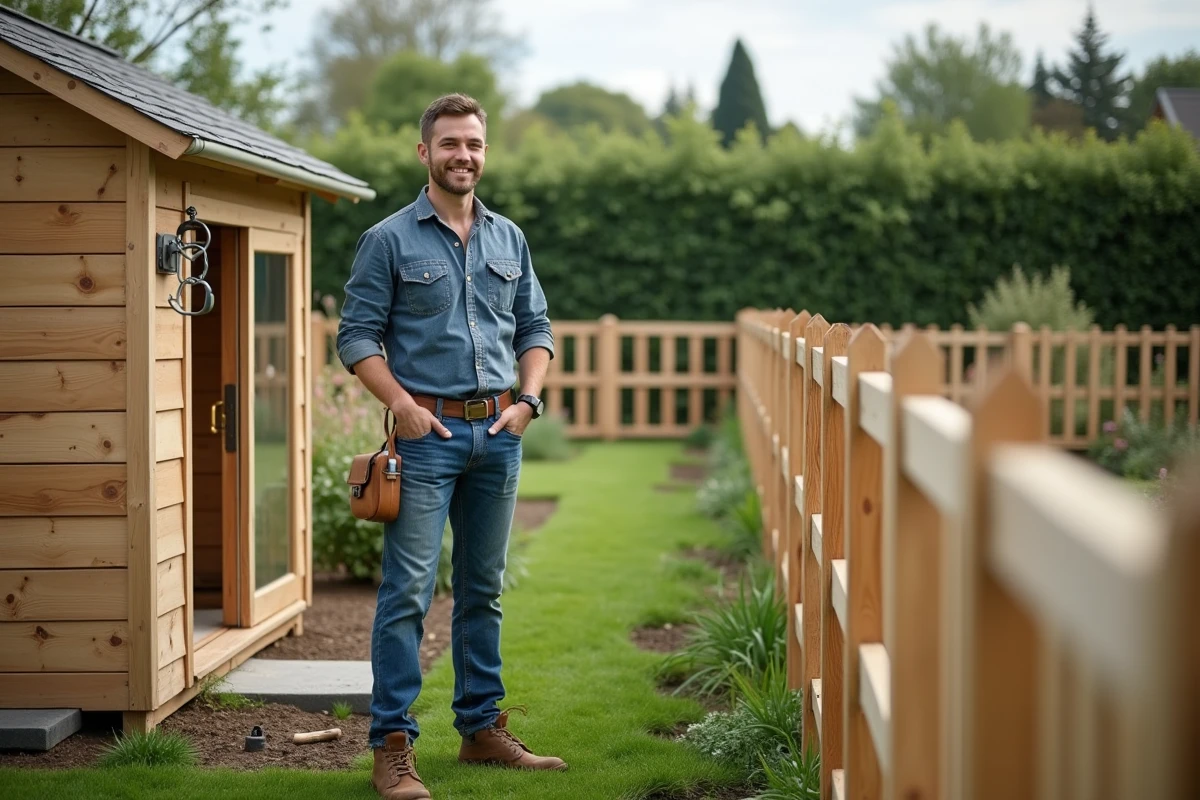
Understanding the ecological and practical advantages of wood for sustainable landscaping
Choosing a wooden trellis is betting on durable protection and a responsible approach. Local wood from managed forests or recycled, French manufacturing: every detail favors respect for life as well as local economy.
Maintenance is not burdensome: a wash once a year, a protective treatment every two or three years is enough to keep the structure going for over ten years. Delivery in rolls simplifies installation, without technical investments or long days of assembly. Changing the layout becomes child’s play, according to needs or seasons.
Wood regulates temperature, ensures good air circulation, and helps crops withstand extreme episodes. Above all, its authenticity harmonizes with the ambiance of a natural garden and enhances every green corner.
In summary, keep in mind these major advantages of sustainable landscaping:
- Maintenance of wooden trellises: gentle washing, maintenance treatments to maintain the wood’s luster
- Robustness: trellises protect without faltering, season after season
- Solution delivered in rolls: simplified installation, shipped throughout France
- Local production: direct support for French workshops, rooted in the wood industry
Ultimately, investing in this type of protection gives a true presence to the garden: a living, solid, and welcoming space, ready to adapt to the challenges of time and the dreams of those who shape it.