Designing an interior is about more than choosing a sofa and a wall color. The most important decisions are made beforehand, based on factors that decoration alone cannot fix: ventilation, thermal exposure, and how well the materials work together.
Thermal comfort and air quality: the essentials before any interior decorating
Improving a room’s insulation without adapting its ventilation can lead to condensation and mold. Qualitel points out that managing air quality and humidity is just as important as insulation. In an older home, applying decorative plaster or wallpaper to a poorly ventilated wall simply hides a problem that will reappear within months as bubbles or black stains.
Summer comfort is another often-overlooked factor. Before converting an attic or choosing curtains, check the sun exposure and exterior shading (solar screens, shutters, façade overhangs) to avoid turning a room into a sauna as early as June. An interior light-filtering blind is no substitute for exterior solar protection, which is far more effective at preventing overheating.
These considerations also influence the choice of flooring. Large-format tile helps retain coolness in summer, while solid wood flooring feels more comfortable underfoot in winter. We recommend weighing these factors against the existing heating system before finalizing the finishes.
Wall coverings and materials: choose for the room, not the trend
The resources available in Conceze’s home section illustrate the range of approaches available for every room, from the living room to the bathroom. This variety is useful because a wall covering that performs well in a dry living room can deteriorate quickly in a damp space.
Moisture resistance determines how long a wall covering will last. Lime plaster naturally regulates humidity and is suitable for older bathrooms. By contrast, non-woven wallpaper—even if rated as washable—does not hold up well in a bathroom without mechanical ventilation.

Textured wall finishes (troweled plaster, limewash, stucco) are making a comeback in living spaces. Their appeal goes beyond aesthetics: they conceal imperfections in old walls without requiring a full skim coat. The application technique (using a trowel, brush, or textured roller) creates surface variations that smooth paint cannot replicate.
What to consider when choosing a wall covering
- Fire rating: check the reaction-to-fire classification (Euroclasses) for rooms with a fireplace or wood-burning stove, where a flammable covering near a heat source poses a real risk
- Water vapor permeability: an old stone or brick wall needs a breathable covering; otherwise, moisture can become trapped in the wall and accelerate its deterioration
- Abrasion resistance: in a hallway or entryway, a hard mineral finish (such as tadelakt) withstands scuffs better than standard satin acrylic paint
- Substrate compatibility: lime plaster applied to a plaster wall requires a suitable bonding primer; otherwise, there is a high risk of peeling
Living room layout and circulation: proportion mistakes that weigh down a space
An oversized piece of furniture makes a room feel smaller than a dark wall does. The main cause of discomfort in a living room is not color, but floor space taken up by furniture. A large corner sofa in a modest-sized living room blocks pathways and creates a cramped feeling that neither light paint nor mirrors can offset.
As a rule of thumb, leave a clear passage at least as wide as an outstretched arm (about 60 cm) between each piece of furniture and the walls. Any less, and moving around becomes awkward, disrupting the flow of the room.
Arranging furniture to suit the shape of the room
In a long, narrow living room, placing the sofa perpendicular to the longest wall creates two distinct areas (for conversation and circulation) without adding a partition. A rug defines each area visually more effectively than a low cabinet, while still allowing the eye to travel through the room.
In a square room, the classic mistake is to push all the furniture against the walls. Pulling the sofa 30 to 40 cm away creates storage space behind it (for a console table or low shelf) and adds depth to the room. Moving furniture away from the walls makes a room look larger.
Color and light: coordinate your choices with the home’s orientation
You can’t choose a paint color from a swatch in a store alone. The same paint shade can look cool in a north-facing room and warm in a south-facing one. A room’s orientation determines how warm or cool a color appears, making catalog choices unreliable without testing them in the space itself.
The safest approach is to place a sample (at least A3 size) on the wall in question and observe it at three times of day: morning, midday, and late afternoon under artificial light. Greens and blues shift noticeably under incandescent lighting, while ochres and terracotta tones remain more consistent.
Artificial lighting: layer your light sources
A single ceiling light creates flat lighting that makes a room feel less dimensional. Three layers of light are enough to give a room structure:
- General indirect lighting (a pendant with a diffuser, or LED strip lighting in a ceiling cove) for ambient comfort
- Directional task lighting (a reading lamp or a recessed spotlight above a worktop) for specific activities
- Accent lighting (a wall sconce or table lamp) to add depth and highlight a wall or an object
Layering three types of lighting transforms a room’s atmosphere more than changing the wall color. Bulb color temperature (measured in kelvins) deserves as much attention as the wall color: a cool-white bulb in a living room with warm tones can undo all your decorating work.
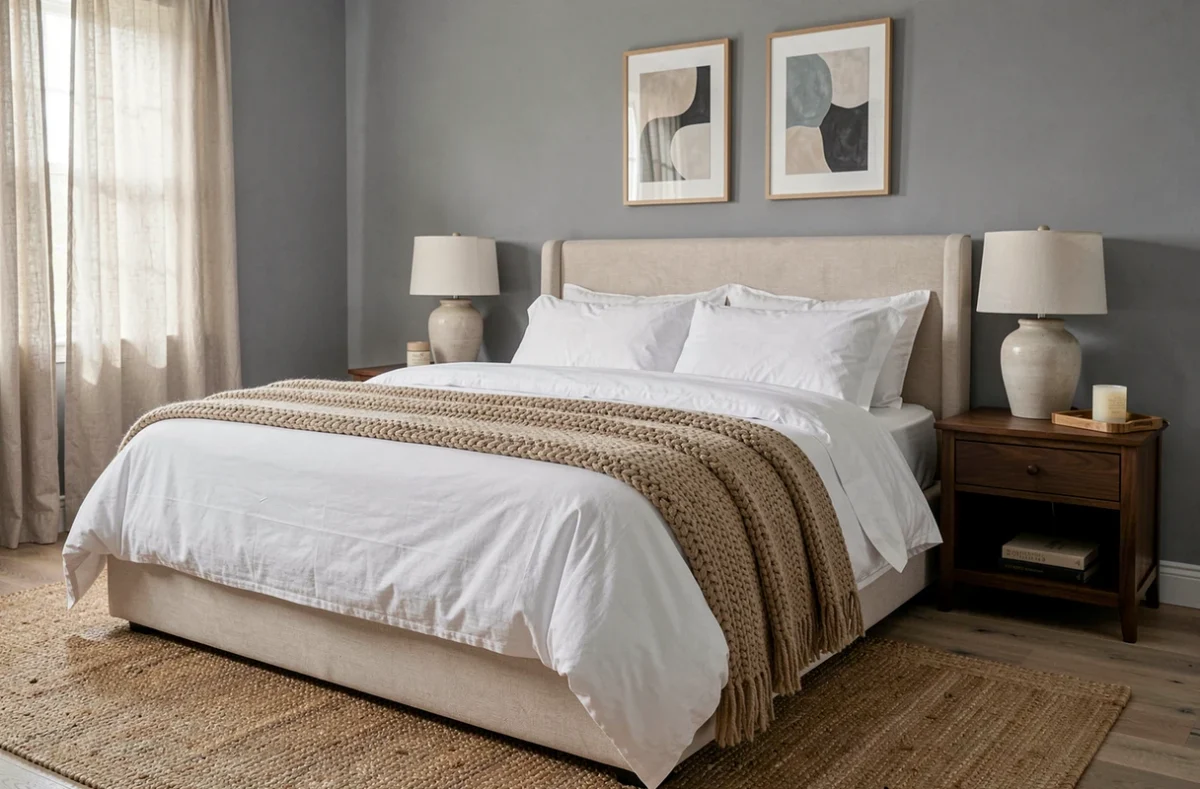
Regular interior maintenance—cleaning textiles, checking seals, and dusting ventilation grilles—extends the life of every decorating choice. A beautiful space that is poorly maintained deteriorates faster than a simple one that is well cared for. The best decorating idea is one that stands the test of time in the home’s real-world conditions.