
One click is enough to cross borders that once required weeks of preparation and substantial budgets. International museums, national parks, and historical monuments open their doors remotely, without constraints of time zones or queues.
Some institutional initiatives, usually reserved for researchers or small groups, become accessible to the general public thanks to dedicated platforms. Access to these digital experiences transforms discovery habits and redefines the very notion of travel.
Why virtual travel is increasingly appealing to explorers
The rise of virtual travel is not just a passing trend. The shock of the coronavirus pandemic disrupted practices and accelerated the massive use of technology to explore the world without ever leaving home. Health restrictions, closed borders, successive lockdowns: the digital realm has become the essential ally for those who want to continue exploring.
Virtual tourism enthusiasts now choose the comfort of home to open themselves up to new cultural experiences. Traveling from home erases distances and offers everyone what was once reserved for a handful of privileged individuals. Once limited to tech enthusiasts, virtual reality is now part of everyday life, democratizing access to major historical or natural sites.
Visit Panorama du Monde online is proof of this. No more need to manage luggage or time zones: anyone can, whenever they wish, admire unknown landscapes, contemplate masterpieces, or wander through historically rich places. These digital journeys appeal to both geography lovers and curious individuals seeking authenticity and unique stories.
Here are some concrete benefits that explain their success:
- Immediate discovery of new cultures
- Immersion in virtual reality without logistical constraints
- Access to enriched, interactive content often accompanied by educational resources
The appeal of these virtual journeys also lies in the fact that they reinvent the way to explore the world from home. Geographical boundaries fade away, giving way to exploration driven by curiosity, the desire to learn, and freedom.
Which platforms to choose for immersive experiences from home?
The virtual visit acts as a bridge between reality and imagination, providing access to a multitude of possible destinations without leaving the couch. The choice of digital platform influences the richness and fluidity of the adventure. Some offer intuitive navigation, while others focus on interactivity or the accuracy of the reconstruction. Art and culture enthusiasts, fond of virtual museum tours, can explore high-definition digitized galleries, stroll through the corridors of the Louvre, or admire Victor Hugo’s manuscripts at any time and without the crowds.
In France, technology enhances heritage: Versailles or the tomb of Ramses VI become accessible in an instant. Paris, New York, Florence, Amsterdam… Collections and exhibitions open wide their doors thanks to virtual reality. For those equipped with an HTC Vive virtual reality headset or equivalent, the immersion is total: one can feel the ambiance of the places, the intricacy of architectural details, and the light dancing on the artworks.
Far from being limited to Europe, these virtual visits extend to Canada, Alaska, and even the world of NASA. They enrich preparations or serve as an extension to future vacations, inviting discovery at home. Exploring Panorama du Monde online means letting the planet come to you, guided by curiosity and desires for escape.
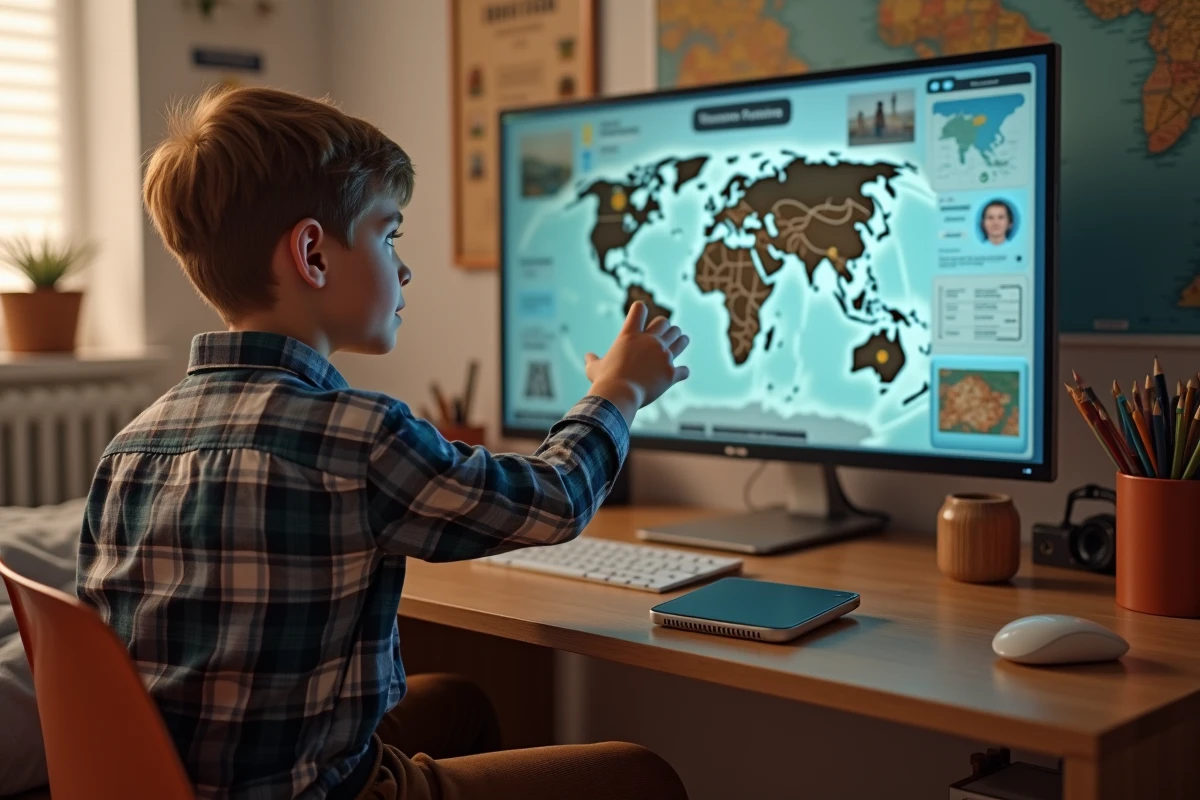
Traveling without a carbon footprint: a responsible alternative within everyone’s reach
The rise of virtual travel disrupts our relationship with the world. With the environmental pressure weighing on tourism, it becomes necessary to rethink our reflexes. Traveling without planes, without cars, without even packing a suitcase: virtual tourism asserts itself as a responsible alternative. Thanks to virtual reality headsets or simply through online platforms, exploring nature from a distance no longer generates polluting emissions.
Virtual reality travel allows everyone to reduce their carbon footprint. The numbers speak for themselves: a round trip from Paris to Tokyo by plane emits over 2 tons of CO₂ per passenger. By choosing digital immersion, this footprint disappears. Technology becomes a lever for traveling more sustainably, without sacrificing the richness of the human experience or the joy of discovery.
Here’s what virtual tourism makes possible, all while preserving the planet:
- Discovery of distant landscapes
- Exploration of natural or urban heritage
- Cultural encounters through interactive content
Without leaving their living room, it becomes possible to multiply discoveries without ever burdening the environment. The planet reveals itself, accessible, open, ready to be explored differently. The internet establishes itself as a true universal passport, capable of opening new horizons to everyone’s curiosity, where technology and ecological awareness converge. Borders fade away, and the thirst for discovery knows no limits.