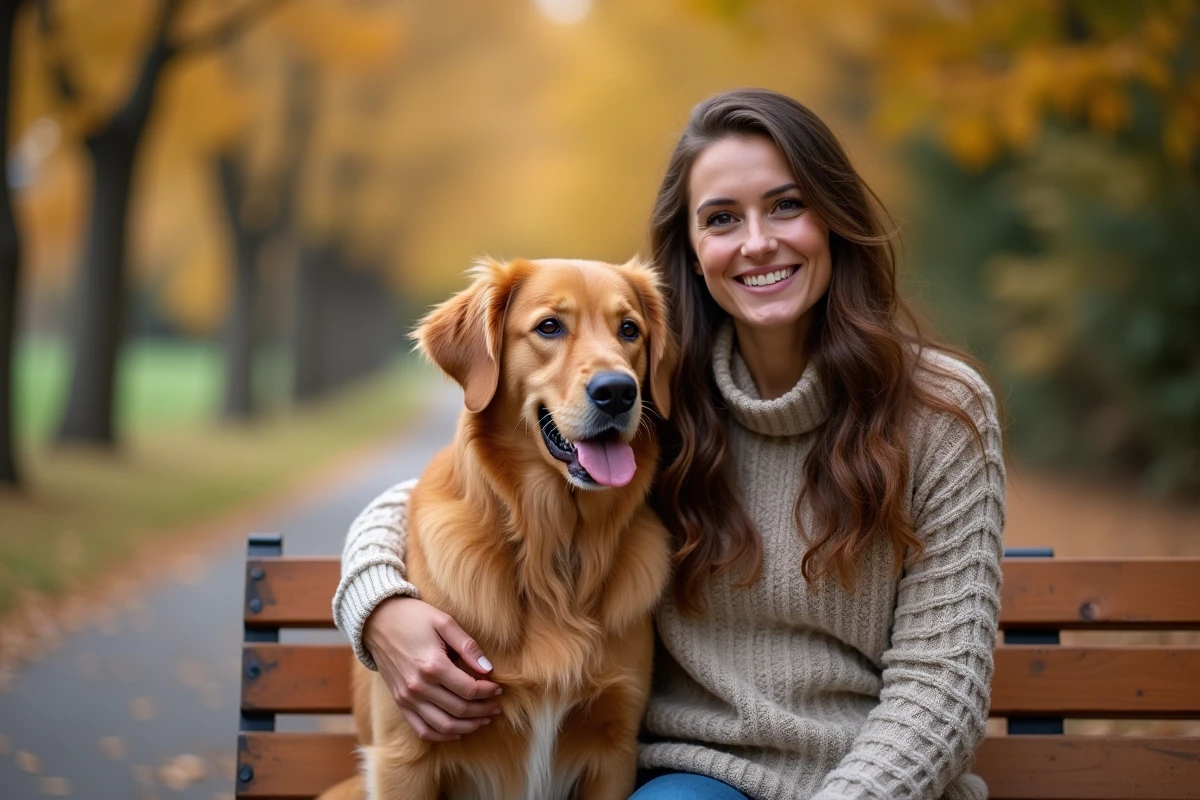
The early detection of pathologies in dogs and cats relies less and less on mere clinical observation. Artificial intelligence tools now analyze health data collected by wearable sensors or during veterinary check-ups, identifying subtle signals long before visible symptoms appear. For animal lovers, this evolution changes the way they understand and support their four-legged companions on a daily basis.
Artificial Intelligence and Veterinary Diagnosis: What Changes for Pets
Machine learning algorithms applied to veterinary medicine process datasets from activity, heart rate, or body temperature sensors. Their function: to detect subtle variations that standard clinical examination does not always capture at an early stage.
AI detects behavioral and physiological anomalies before the first visible symptoms. A gradual slowdown in locomotor activity in a dog, a change in sleep patterns in a cat: these micro-signals, drowned in the noise of daily life, become actionable once aggregated by an algorithm trained on sufficiently large cohorts.
We observe that this predictive approach is mainly deployed in animal cardiology and oncology, two fields where late diagnosis significantly reduces therapeutic options. Platforms that centralize this data allow veterinarians to cross-reference behavioral history with biological results, refining decision-making.

Enthusiasts who wish to deepen their knowledge of the animal world and follow these developments can find articles, advice, and species sheets on Univers Animaux, a resource that covers both dogs and cats as well as less common species.
Post-Pandemic Abandonment Syndrome in Cats: A Persistent Behavioral Issue
AFVAC (French Association of Veterinarians Specialized in Behavior) documented an increase in cases of post-pandemic abandonment syndrome in cats adopted between 2020 and 2022 during its congress in January 2026. These animals, socialized in an environment where their owners were continuously present, develop marked anxiety disorders upon returning to a normal pace of life.
Behavioral therapies have seen a significant resurgence since 2025. Treatment combines environmental enrichment, desensitization protocols, and, in some cases, temporary pharmacological support. The use of a veterinary behaviorist is becoming more common, where many owners previously relied on advice gleaned online.
This phenomenon serves as a reminder that adopting an animal is a long-term commitment. The emotions of a companion are not limited to visible affection: a cat that stops playing, changes its eating habits, or over-grooms its fur expresses discomfort that the passionate owner must learn to decode.
Small Dogs in Urban Environments: Why Seniors Are Changing Dog Demographics
The Mars Petcare “Animal Ownership Trends 2026” survey confirms that small dogs have surpassed large breeds in popularity among urban seniors since 2024. The main reason is mobility: a small-sized dog adapts better to compact housing and public transport.
- Managing physical exercise is more flexible: two short walks a day are sufficient for most breeds under ten kilos, compared to significantly higher needs for a shepherd or retriever.
- The cost of maintenance (food, veterinary care, grooming) remains proportional to size, which weighs on a retiree’s budget.
- Brachycephalic breeds remain highly sought after despite veterinary warnings about chronic respiratory complications related to their morphology.
This trend has a direct effect on breeding offers and shelters. Large breeds, less sought after, remain there longer. Animal protection associations are adapting their adoption campaigns accordingly.

Regulation of Hybrid Crossbreeding in France: The 2026 Decree
Decree No. 2026-245 from the Ministry of Agriculture and Food Sovereignty, published in the Official Journal on April 1, 2026, now regulates non-standard hybrid crossbreeding for so-called “trendy” dogs (Goldendoodles, Cockapoos, and similar). The gradual ban on these crossbreeds aims to protect animal welfare by limiting genetic drift linked to purely aesthetic selection.
In practice, breeders must demonstrate enhanced health monitoring for each litter resulting from a crossbreed not recognized by the Fédération Cynologique Internationale. The FCI, in its annual report published in March 2026, reminds that genetic traceability remains the foundation for preventing hereditary diseases.
For enthusiasts considering welcoming a dog, this regulation requires checking the breeder’s status and the compliance of the crossbreed before any acquisition. An animal from an unregistered breeding exposes its owner to health and legal complications.
Understanding Animal Emotions: Beyond Stories and Books
Books on animal behavior are multiplying, from rescue stories to documentary books on canine or feline psychology. Their interest goes beyond entertainment: an owner who understands the emotional mechanisms of their companion significantly reduces the risk of behavioral disorders.
Popularized scientific literature allows for distinguishing signals of stress, pain, or satisfaction in dogs and cats. Children, often the first to request a pet at home, benefit from children’s books that lay the foundations of respect and responsibility towards domestic species.
We recommend complementing these readings with advice from a behavior professional, especially when the animal shows signs of persistent discomfort. The passion for animals deepens when it is based on solid knowledge rather than mere affection.
The animal world is evolving rapidly, with technological advances in veterinary health, new regulations, and sociological changes in pet ownership. Keeping up with these transformations is to offer every four-legged companion the quality of life they deserve.