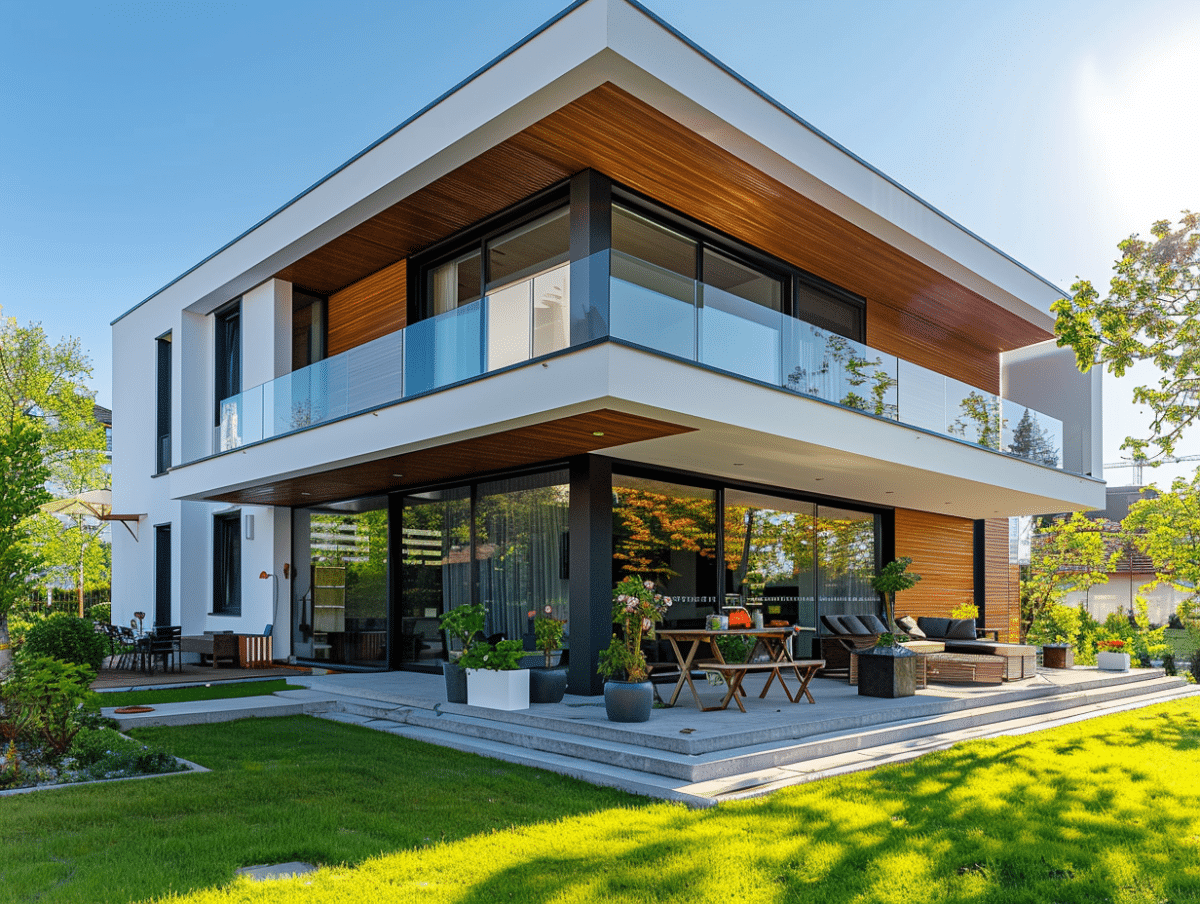
The cost estimation for the external insulation of a 100m^2 house requires considering several factors. The type of insulating material chosen, the thickness of the insulation, the installation technique, and the rates charged by professionals are all elements to analyze. The configuration of the house, any specific characteristics of the building, such as the presence of numerous windows or doors, also influence the budget to be planned. External insulation has the advantage of not reducing the living space and can be accompanied by an improvement in the aesthetics of the facade, while contributing to substantial energy savings.
Factors Influencing the Cost of External Insulation for a 100m2 House
The price of external insulation for a 100m2 house is established based on various determining elements. Firstly, External Thermal Insulation (ITE), recognized for its effectiveness, is generally more expensive than its interior counterpart. This cost difference is explained by the complexity of the work and the added value in terms of energy performance and aesthetics. Therefore, the choice of this method should be carefully considered, taking into account the initial investment and long-term benefits.
The facade area significantly influences the necessary budget. The average insulation price varies depending on this area, with an estimated range between 100 and 200 euros per square meter. A projection for a 100m2 house requires a prior analysis of the actual facade to be insulated, which may differ from the mentioned living area.
The chosen insulating materials play a predominant role in determining the cost. Polystyrene, rock wool, wood fiber, each has its thermal properties and specific price. These materials, combined with different insulation techniques, from glued installation to mechanical fastening, lead to notable variations in the final budget calculation.
Considering available financial aid can lighten the cost of the work. Some subsidies, such as MaPrimeRénov’ or the energy bonus, are designed to encourage energy renovations and can substantially reduce the average insulation price. Be aware of the eligibility conditions for these aids to optimize your budget and lessen the financial impact of your external thermal insulation project.
Detailed Cost Estimation for External Insulation of a 100m2 House and Financing
Developing a detailed cost estimation for External Thermal Insulation (ITE) of a 100m2 house requires a rigorous approach. Firstly, the energy performance improved by ITE results in a significant reduction in heating bills. For an accurate estimate, the Energy Performance Diagnosis (DPE) serves as a fundamental indicator, reflecting the ability of the dwelling to retain heat and optimize energy consumption. This diagnosis, in addition to its informative contribution, positively influences the real estate value of the property.
Secondly, the quality of life within the dwelling is notably enhanced by ITE. The thermal comfort is improved, thanks to the reduction of thermal bridges and heat loss. This advantage, beyond the financial aspect, contributes to the longevity of the house, preserving its structure from external climatic aggressions and reducing CO2 emissions in a sustainable development perspective.
Financial aids such as MaPrimeRénov’ and the energy bonus play a decisive role in reducing the cost of insulation work. These subsidies, aimed at encouraging energy renovation work, can significantly reduce the initial investment. It is essential to inquire about these schemes and calculate their impact on the final budget of the ITE for a 100m2 house to obtain an adjusted and advantageous financial estimate.