
Have you ever felt a sudden fatigue in the middle of a series of squats or a run? This lack of energy often comes from what you have eaten, or not eaten, in the previous hours. The choice of carbohydrates before training directly determines the quality of your session, your endurance, and your ability to maintain effort.
Simple or complex carbohydrates before sports: how your digestion changes
Before choosing a food, it’s essential to understand how your body processes carbohydrates. The so-called “simple” carbohydrates (fruits, honey, juice) are absorbed quickly. They provide glucose available within minutes.
On the other hand, “complex” carbohydrates (oatmeal, sweet potato, brown rice) take longer to break down. Their energy arrives gradually, which prevents spikes followed by sharp drops.
When you eat a banana thirty minutes before effort, the energy is almost immediate. A bowl of oatmeal two hours before will provide a steady flow of glucose throughout the session. It’s not that one is better than the other: the right choice depends on the time between the meal and the effort.
A point often overlooked concerns carbohydrates before training and individual digestive tolerance. Research published in Nature Medicine (Berry et al., 2020) confirms that the glycemic response to the same food varies significantly from person to person, depending on the gut microbiome. A food that works perfectly for a teammate may cause bloating or discomfort for you.

Glucose-fructose mix: the approach that changes endurance protocols
In recent years, sports nutrition protocols in endurance have evolved. Several recent studies show that a mix of glucose and fructose improves carbohydrate oxidation and reduces digestive discomfort compared to a single carbohydrate source.
Why does this mix work better? Glucose and fructose use different intestinal transporters. By combining the two, the body absorbs more carbohydrates per hour without overloading a single transport mechanism. Professional endurance teams have adopted this approach for their pre-competition meals and snacks.
In practice, this means combining varied foods rather than relying on a single source. For example, oatmeal (glucose) paired with some fresh fruit pieces (fructose). Or a slice of whole grain bread with a bit of applesauce. Varying carbohydrate sources in the same pre-effort meal is more effective than a single food.
Timing and specific foods before training
The timing of your meals is just as important as what you eat. Here’s a simple guideline to remember:
- Two to three hours before effort: a meal containing complex carbohydrates (rice, whole pasta, sweet potato) with a light source of protein. Digestion has time to occur.
- One hour before: an easy-to-digest snack, like a banana, a handful of oats, or a slice of bread with a bit of honey.
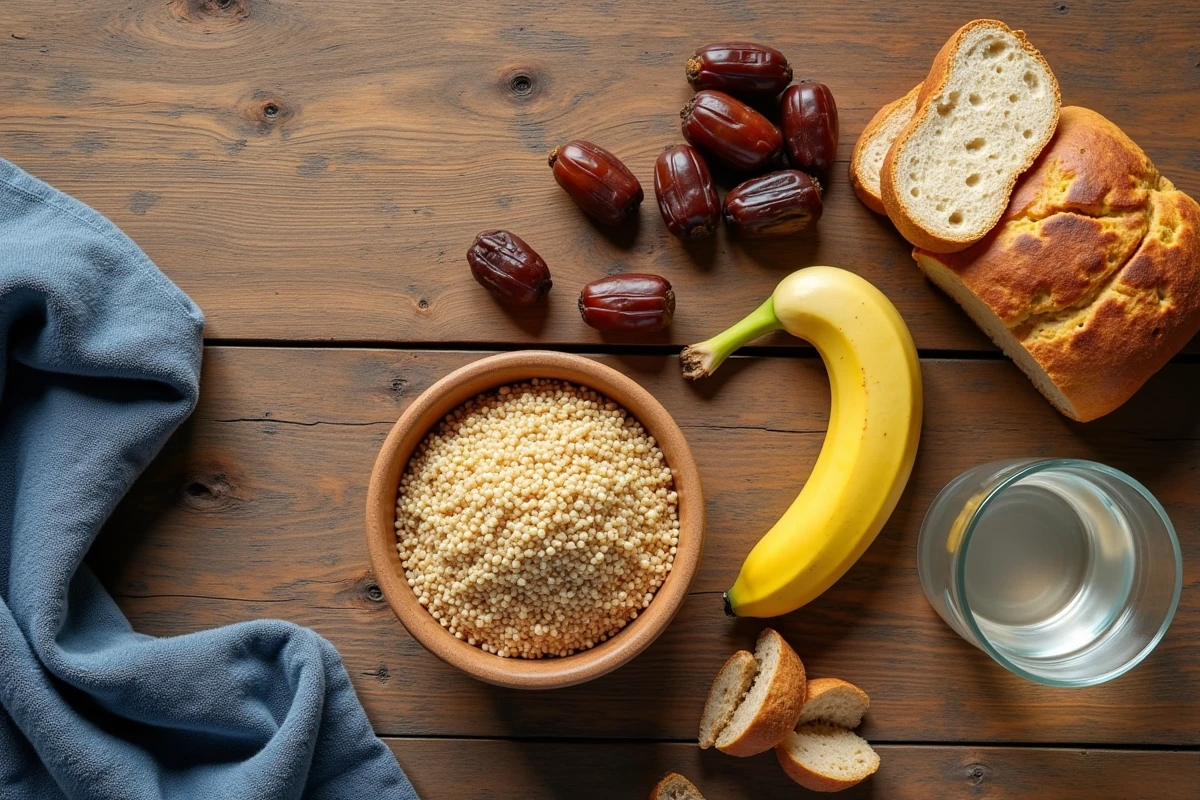
- Thirty minutes before: only simple carbohydrates and low fiber. A ripe fruit, applesauce, or a few dates will suffice.
The closer you are to the session, the simpler and lower in fiber the food should be. Fiber slows digestion and can cause gastric issues during effort.
Foods to avoid just before a session
Some carbohydrates that are often recommended can cause problems for sensitive athletes. Whole grains that are very high in fiber, large quantities of dried fruits, or excessive honey increase the risk of intestinal issues. This observation is particularly documented among athletes with sensitivity to FODMAPs, for whom the classic recommendations have been adjusted since 2022.
If you regularly experience bloating or cramps during effort, try more neutral carbohydrate sources: white rice, very ripe bananas, or sandwich bread. Personal tolerance takes precedence over any “ideal” list.
Adjusting carbohydrate quantity to the type of effort
A one-hour weight training session does not require the same intake as a three-hour bike ride. Have you ever wondered why some athletes eat a lot before effort while others eat almost nothing?
For high-intensity activity, sports nutrition experts recommend placing carbohydrates at the center of the pre-effort diet. The longer and more intense the exercise, the more muscle glycogen stores will be utilized, and the higher the intake should be beforehand.
For a short workout (less than 45 minutes) at moderate intensity, a light snack is sufficient. For endurance efforts exceeding an hour, a proper structured meal two to three hours beforehand remains the best option.
- Short and moderate effort: a banana or a small handful of dates.
- Intense one-hour effort: a bowl of oatmeal with a fruit, consumed 90 minutes before.
- Long endurance (over 90 minutes): a complete meal based on rice or pasta, with light proteins and a fruit, consumed two to three hours before.
Pre-training nutrition is calibrated according to the duration and intensity of the effort, not according to a universal rule. What works for a sprinter may not be suitable for a marathon runner.
Nutrition before training is not mysterious, but it requires listening to your own digestion as much as to general recommendations. Test food combinations, adjust quantities, and note what works. The best pre-effort carbohydrate is the one your body tolerates and converts to energy without discomfort.